What’s Haunting Your Marriage?
Welcome to our Marriage War and Peace blog for October!
With Veronica L. Nabizadeh
Some ghosts don’t rattle chains or hide in dark hallways.
They enter a marriage as old fears, unfinished hurts, painful memories, and haunted stories we have carried for years. They whisper:
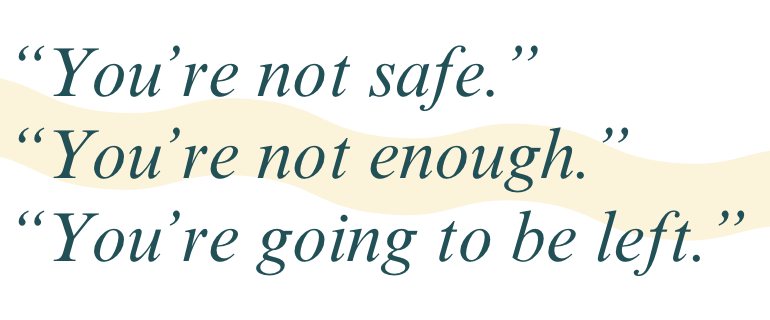
Then, before we realize what is happening, we respond to our spouse as though the past has stepped into the room.
That’s what we’re exploring in this month’s issue: how to recognize when an old wound is haunting a present-day conflict—and how to respond to what’s happening now.
Welcome! Whether you’ve been with me for years or this is your very first issue, I’m so glad you’re here.
Each month, I share practical relationship tools, honest conversations, and encouraging insights to help you strengthen your marriage, reconnect with yourself, and remember that if it’s worth fighting about, it’s worth fixing.
If you’re not already subscribed, I invite you to join our community and receive The Marriage War and Peace Blog, exclusive relationship resources, and updates about upcoming events.
It may begin with something small:
Your husband’s quieter than usual
He forgets to call
He seems distracted while you’re speaking
He asks for space in the middle of a difficult conversation
In that moment, you’re not only noticing what he did. You’re deciding what it means:
He’s pulling away
I don’t matter to him
He doesn’t care how I feel
I’m about to be rejected again
Suddenly, the emotion flooding your body feels much larger than the moment itself.
The present conflict is real. But it may not be the only thing haunting the room.
An old fear may have joined the conversation.
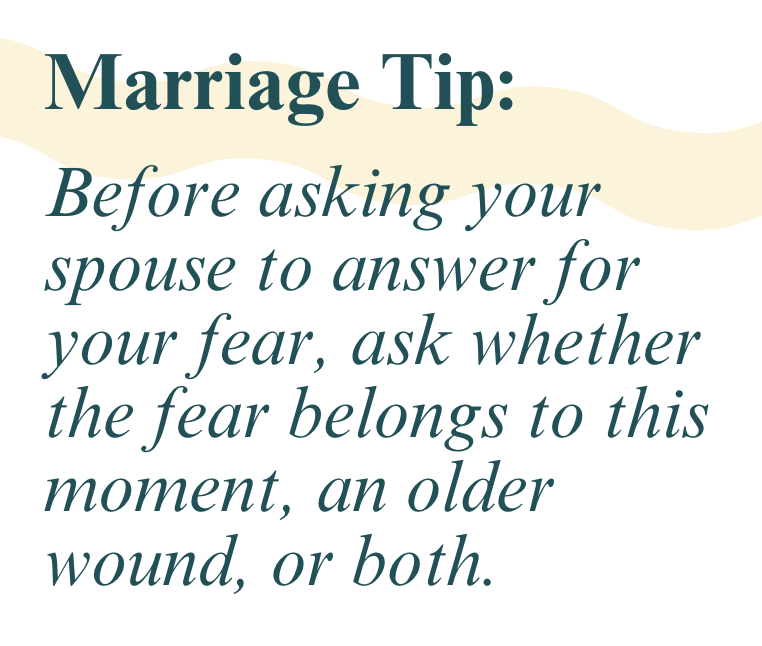
That’s why this month’s Marriage Question of the Month matters so much.
Begin by paying attention to the size, speed, and story of your reaction.
A reaction connected to an older wound often arrives quickly and with certainty. Before you’ve gathered much information, your mind has already decided what your spouse’s behavior means and what’ll happen next.
You may notice thoughts whispering to you, such as:
“He always does this.”
“No one ever stays.”
“I knew I couldn’t trust him.”
“I’m never important to anyone.”
“Nothing’s ever going to change.”
Words such as always, never, everyone, and no one can signal that this moment has become connected to something larger.
Next, separate the facts from the ghost haunting the story.
The fact might be: “He hasn’t answered my text for three hours.”
The story might be: “He’s ignoring me because I don’t matter.”
The ghost haunting the story might be saying: “I’m afraid I’m not important enough to be chosen.”
Once you identify the fact, story, and ghost, you can communicate to your husband from clarity:
“When I didn’t hear from you, I noticed myself assuming I was being ignored. I know that fear is tender for me. Can you tell me what happened?”
This allows you to take responsibility for your story while inviting your husband into an honest conversation about the present.
However, if the behavior is part of a repeated, damaging pattern, name that too:
“This isn’t only about today. We’ve agreed several times that you’ll call when plans change, and it continues to happen. I need us to address the pattern because it’s affecting my trust.”
The first response asks your spouse to answer for an assumption.
The other clearly names observable behavior and its impact.

Once you’ve separated the facts from the story, you can look more deeply at where the fear began.
Perhaps you grew up never knowing when affection would be withdrawn.
Maybe a previous partner betrayed you.
Perhaps your husband broke your trust years ago, and part of you still braces for it to happen again.
Maybe you learned very early that love had to be earned.
These experiences can create powerful stories about what distance, silence, disagreement, or disappointment means. The story may feel completely true because the feeling attached to it is so familiar.
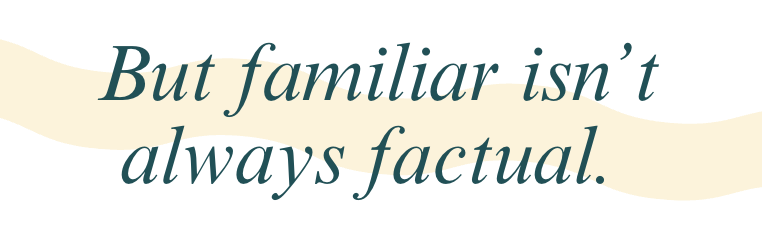
Sometimes your husband’s silence means he’s angry. Or sometimes it means he’s overwhelmed, tired, distracted, or trying not to say something hurtful.
Sometimes a forgotten call reveals carelessness that needs to be addressed. Or sometimes it’s simply a forgotten call.
The goal is to become curious before allowing an old fear to explain the entire present moment.

While it’s true that some of what haunts a marriage began long before the relationship. However, other wounds were created inside it:
A broken promise
A betrayal
Years of emotional distance
Repeated dismissal
These can teach your nervous system to expect more of the same.
If trust has been damaged, your reaction isn’t necessarily an irrational echo from the past. It may be your body remembering something that truly happened between you.
Ask yourself: Am I responding to an old story, a current pattern, or some combination of both?
That question can keep you from blaming yourself for every reaction—and from blaming your spouse for pain he didn’t create.
From The Battle-Weary Wife’s Deck of Strength and Wisdom
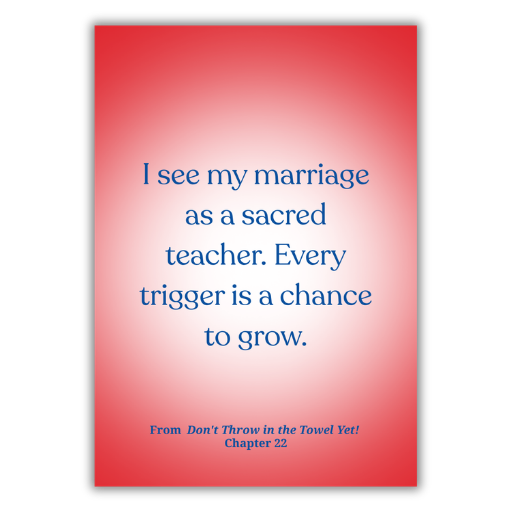
A trigger can feel like proof that something is wrong—with you, your spouse, or your marriage.
But a trigger is also information. It reveals where pain still lives, where trust needs attention, where a boundary may be needed, or where an old belief is asking to be questioned.
THIS MONTH’S PEACE PRACTICE

The next time a reaction feels immediate, intense, or strangely familiar, pause before acting and spend five minutes separating the present from the past.
Minute 1: Name What Happened
Leave out your interpretation, your spouse’s motives, and words such as always or never. Just name it.
Minute 2: Name the Story
What did you immediately decide the moment meant? Finish this sentence: “When that happened, I told myself...”
Minute 3: Name the Ghost
What are you afraid this means about you, your spouse, or the future of your marriage?
Minute 4: Ask When You’ve Felt This Before
Does this feeling belong entirely to today, or has it visited you before?
Minute 5: Return to What’s True Now
Ask: What do I know? What do I need to clarify? What would a calm, truthful response sound like?
You might say: Something about this brought up an old fear for me. I don’t want to assume I know what you meant. Can we talk about what happened?
THIS MONTH’S RUNE PULL
This Month's Rune: From The Healing Runes for the Battle-Weary Wife
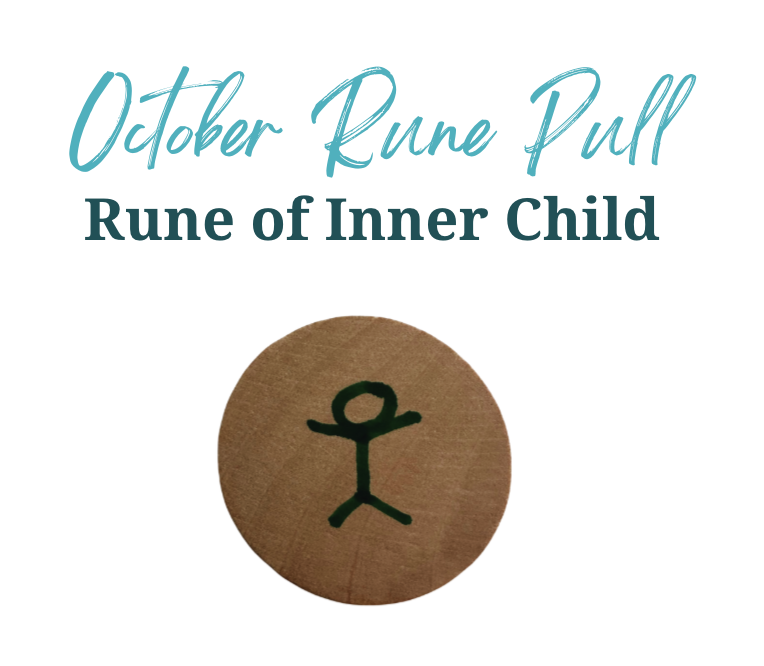
Your wounded inner child speaks through your reactions. Listen.
Sometimes the woman who’s arguing with her husband is that younger part of her who feels threatened. She may chase reassurance, demand immediate resolution, become defensive, or retreat before anyone can reject her.
Before asking your husband to calm the fear, pause and ask yourself: How old do I feel in this moment, and what does that younger part of me need to hear from me?
Then return to the conversation as the woman you are now—not as the frightened girl who first learned the fear.

Looking for more ways to connect with me beyond The Marriage War and Peace Blog?
I’m excited to introduce Connecting with Veronica, a new place on my website where you can find my upcoming speaking engagements, podcast episodes, webinars, workshops, special events, and other opportunities to continue the conversation.
Whether you’d like to listen, learn, attend an event, or simply stay connected, everything you need will now be gathered in one convenient place.
See what’s coming up—and come join me!
THIS MONTH’S PROMOTION

Stop Fighting the Ghosts and Start Turning Things Around
If today’s article helped you recognize that an old fear may be entering your present-day conflicts, awareness is an important beginning. But insight alone doesn’t always change what happens when the next argument catches fire.
That’s why I created the Stop, Drop, and Roll, Baby!® Turnaround—a transformative two-day virtual event designed especially for battle-weary wives. Join me on October 2 and 3 to discover what’s really happening beneath the conflict and learn how to respond differently.
During our time together, you’ll:
Discover the Seven Relationship Saboteurs that may be haunting your marriage.
Learn the Stop, Drop, and Roll, Baby! Technique that helped save my own relationship.
Gain practical tools to defuse arguments, communicate more effectively, and reclaim your sanity and peace.
If you’re ready to understand the ‘what’ behind the ‘why’ you’re fighting so much—and begin creating a different way forward—reserve your spot today.
The Turnaround is limited to 30 Zoom participants.